How to ask her to hang out on Hinge without killing momentum
How to ask someone to hang out on Hinge: when to suggest meeting, how to attach a real plan, and what to do if the answer is slow, soft, or no.
Someone who matched with you on Hinge has already done the hard part of deciding you are worth a conversation, but that does not mean they are sitting there waiting for an invitation. They are probably juggling a few chats, some good and some stalled, and they are quietly sorting which ones deserve a real evening. When your message arrives, they are not weighing a stranger's proposal in a vacuum. They are comparing the feel of your chat against the others. An invitation that fits what you two have been talking about lands as a natural next step. One that appears from nowhere lands as a form letter.
Your goal is narrow. You are not trying to win her over in text or prove anything about yourself. You want one low-pressure, specific plan that she can accept, tweak, or decline in a single reply. Think of the message as handing her a small, easy decision rather than a verdict on you. A drink or a walk costs her an hour and little risk. A vague "we should do something" costs her the effort of inventing the plan herself, and most people quietly pass on that kind of homework.
Hinge changes the timing in a few ways. The app has its own ask-them-out prompt that appears after a stretch of chatting, and some people use it while others think it feels stiff or automated. Using your own words usually reads warmer, though the prompt is harmless if you add a real suggestion alongside it. Notifications also decay fast. A chat that goes quiet for two or three days loses its pull, and a match who has since started talking to someone else may simply never reply. Asking while the thread still has energy matters more than hitting a magic message count.
What backfires is mostly over-engineering. Asking too early, before there is any rhythm, feels presumptuous. Asking too late, after weeks of banter, can turn the chat into the relationship itself, and then meeting feels like a letdown for both of you. Overly polished invitations with exact times and venues she never chose feel like a booking confirmation. Hedged ones that apologize for asking at all feel like you expect a no, which makes a no easier to give.
Reading her response takes some patience. A quick yes with a counter-suggestion is the best case. A warm reply that dodges the plan, like answering your question but ignoring the invite, usually means she likes talking but is not sure about meeting yet. A polite delay, such as a busy week, is worth one friendly follow-up with a different day. A flat decline or silence is a complete answer. Keep chatting if she wants to, but do not repeat the ask.
Matching the ask to her pace
Look at how she writes before deciding how to ask. If her replies are long, she asks you questions, and she picks up your tangents, you can suggest meeting more directly. If she answers in short bursts and takes a day between messages, a softer, lower-commitment idea fits better, like a quick coffee instead of dinner. Her pace tells you how much she wants to invest. You are not trying to speed her up. You are trying to propose something that fits the speed she is already moving at, so saying yes feels easy rather than like a leap.
Tying the plan to her profile
Hinge profiles give you material that other apps do not, since every photo and prompt answer is a conversation hook you can reuse. If her prompt mentioned a favorite taco spot, a long hike, or a trivia night, build the invitation out of that. The plan then shows you read her profile and chat, and it removes the awkward question of where to go. Keep the detail small. You are naming a type of place or activity, not scripting the evening. She can still swap the venue or the day without it feeling like she is rejecting you.
Handling the ask them out button
Hinge surfaces a prompt suggesting you ask your match out, and people argue about whether to tap it. Tapping it alone gives her a generic nudge with no plan attached, so it often gets a polite non-answer. Sending your own message with a specific idea, then using the button only if it fits, tends to work better. Some people also use the end the chat option when a conversation clearly is not going anywhere. That is a clean way to stop investing time in a thread that stalled, rather than letting it fade into awkward silence.
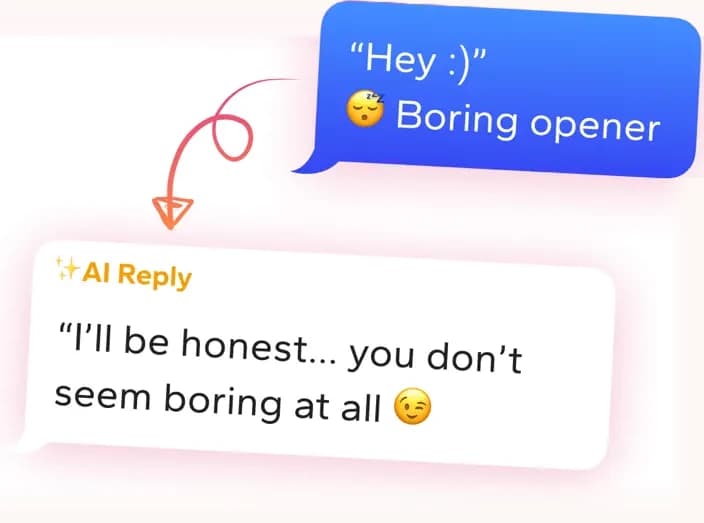
Get replies that sound like you
Screenshot the conversation in WingAI. It reads the vibe and gives you natural replies for this exact situation.
Try for freeHinge AI Screenshot the prompts and get a comment written for that profile.
Messages that backfire
“We should hang out sometime, let me know what works for you”
It hands her the entire job of choosing a day and place, which is the part most people avoid when they are only half sure about meeting.
“Would you be available for a date this Saturday at 7pm at the Italian place downtown?”
Locking in a time and restaurant before she has said she wants to meet reads like a reservation, and it ignores that you do not know her schedule or taste.
“I'd love to get to know you better over coffee at some point soon, if you're ever free”
The hedging and the missing day make it easy to answer with a friendly nothing, so the chat keeps going while the plan never forms.
Common questions
- How many messages should I send before asking someone out on Hinge?
- There is no fixed number. Ask once the chat has an easy back and forth, meaning both of you are asking questions and replying without long gaps. For many people that is somewhere around a handful of exchanges over a few days. If she is warm and responsive, earlier is fine.
- How long should I wait before asking someone out on Hinge?
- Ask while the conversation still has energy, usually within the first week or so of matching. Waiting several weeks tends to turn the chat into a pen pal situation, and matches who go quiet for days often lose interest. Do not rush on day one, though.
- Should I use the ask them out button or write my own message?
- Writing your own message with a specific idea usually works better, since the button alone gives her no plan to react to. You can still use it alongside your suggestion. If a chat has stalled and you want to move on, the end the chat option is a tidy exit.
- What if she says yes but then goes quiet before we set a time?
- Give it a day or two, then send one light message that offers a specific time. If she replies, you are back on track. If she stays silent after that, let it go. Repeated nudges rarely turn a vanishing yes into a real meeting and they tend to add pressure.
Where people go wrong
- Asking before any back and forth exists, so the invitation arrives after one or two messages and reads like a template sent to every match.
- Waiting so long for the perfect moment that the chat cools off, and she moves her attention to someone who asked sooner.
- Stacking multiple options, such as three possible days and two venues, which turns a simple question into a scheduling task.
- Following a no or a long silence with a second and third invitation, which converts a polite decline into discomfort.
From our users
“I was skeptical at first. Then I tried it on a dry chat and the replies actually sounded like me, not a chatbot.”
Mazoonx
“I overthink every text. Having three options and picking the one that sounds like me cut that spiral short.”
Sam R.
“Used it for a couple hours and set up a date the same night. Not even kidding.”
Nikola2214
“I'm busy and half the profiles give you almost nothing to work with. WingAI gets me a solid first line fast without me staring at the screen for ten minutes.”
Ralph
Get replies that sound like you
Screenshot the conversation in WingAI. It reads the vibe and gives you natural replies for this exact situation.
Try for free