How to Accept an Apology Over Text
Learn to reply to an apology text in a way that shows you heard them and moves things forward without overdoing it.
When someone apologizes over text, they're taking a risk. They're also making a bet that you care enough to engage. Your job is to accept it cleanly, without punishing them further or pretending it didn't happen.
A good reply does two things at once: it signals that you heard them and that you're willing to move past this moment. It doesn't need to be long or complicated. The mistake most people make is either going cold and distant (which leaves them hanging) or over-explaining and reopening the wound.
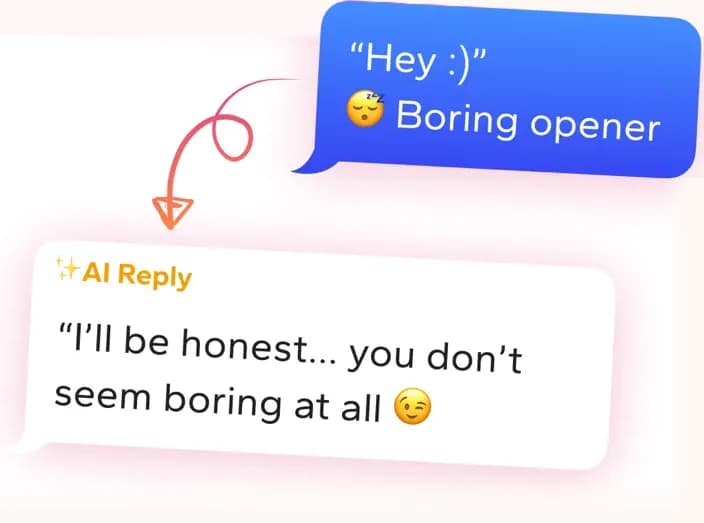
Get replies that sound like you
Screenshot the conversation in WingAI. It reads the vibe and gives you natural replies for this exact situation.
Try for freeRizz AI Screenshot the chat and get the next message for this person.
A real apology names the specific wrong
A real apology names the thing they did wrong. They don't say 'sorry you feel that way' or 'sorry if I upset you'. They say what they did. If they're vague or defensive, they're not actually apologizing, and your reply should reflect that.
Also look at timing. If they waited three days to text, that's different from sending it right after things went wrong. Not necessarily better or worse, but it tells you something about whether this was impulse or thought. An apology sent immediately can be panic. One sent after a day or two often means they sat with it.
Confirm receipt and state what you needed
First, confirm you received it. Don't make them guess whether you read it or not. Second, briefly state what you needed from them, and acknowledge that they gave it. This takes thirty seconds and closes the loop.
Then add one forward-looking sentence. Not 'let's move on and never speak of it again', but something that shows you're still here and still interested in them. The reply should land somewhere between 'I'm done with this' and 'I'm pretending it never happened'. You're saying 'you messed up, you said so, and I'm still in this'.
Send within hours while the moment is live
Send it within a few hours, while the moment is still live. If you wait until the next day, it reads like you had to think hard about forgiving them. That creates doubt.
Don't overthink the reply itself. You don't need multiple drafts. If you're still mad, you're allowed to wait an hour or two, but not days. If you're not going to accept the apology at all, tell them that directly instead of ghosting. If something bigger happened and you need time to figure out what comes next, say that too. But 'I accept your apology and I want to keep talking about this' is a two or three sentence message, not a manifesto.
Why these replies fail
“ok”
It's so terse it reads as angry or dismissive, even if you just meant to keep it simple. They'll wonder if you actually forgave them.
“It's fine, honestly no worries at all, we're good. People mess up, everyone does, I get it.”
Over-reassuring them lets them off the hook completely and makes it seem like what they did didn't matter to you, which creates weird distance.
“Thanks for apologizing, but you really hurt me and I need you to understand exactly why this was so messed up...”
It turns their apology into the beginning of a longer argument instead of accepting it and moving forward.
Common mistakes
- Staying silent to punish them or make them sweat, this just creates anxiety and resentment on both sides
- Over-accepting with 'it's fine, no big deal', it minimizes what actually happened and teaches them it doesn't matter
- Listing all the ways they hurt you in your reply, this turns their apology into a fight
- Asking them to prove they mean it or demanding they explain themselves more, they already apologized, this is extra
- Using sarcasm or a cool tone, it reads as hostile even if you mean it as self-protection
Questions people ask
- Should I apologize back if I also messed up?
- Not in this message. Let them have their moment first. If you both contributed to the fight, you can bring your part into the next conversation, but this reply is about accepting what they said.
- What if I'm still upset and don't feel ready to accept it?
- Don't pretend. You can say something like 'I appreciate you saying that, but I need a little time to process' or 'I heard you, and I need to think about what comes next.' Honesty here is better than a fake acceptance.
- How do I accept an apology if I don't think they actually mean it?
- You probably shouldn't accept it, or accept it very cautiously. You can say 'I want to believe you, but I need to see this change' or 'I'm not sure I trust this yet.' Actions matter more than words.
- Is it bad to bring up the thing they did wrong in my acceptance reply?
- Keep it brief if you do. Naming it shows you heard them, but don't use it as an opening to rehash the whole fight. One sentence that acknowledges what happened, then move to acceptance.
What people say after using WingAI
“I overthink every text. Having three options and picking the one that sounds like me cut that spiral short.”
Sam R.
“I was skeptical at first. Then I tried it on a dry chat and the replies actually sounded like me, not a chatbot.”
Mazoonx
“She went cold mid-week and I had no idea what to say. The reply I sent felt natural and she picked the chat back up.”
Marcus T.
Get replies that sound like you
Screenshot the conversation in WingAI. It reads the vibe and gives you natural replies for this exact situation.
Try for free