How many messages before someone ghosts you
Learn when texting too much pushes someone away and how to keep conversations alive without triggering silence.
Ghosting isn't about hitting a magic message count. It's about the rhythm and energy you're putting out. If you're doing most of the work, asking all the questions, or sending multiple messages in a row before she replies, you're already signaling that she doesn't need to match your effort. The person isn't ghosting because you texted her eight times instead of seven. She's ghosting because the conversation felt one-sided.
The real danger zone is when you start compensating for weak replies by sending more messages. That's the spiral that kills things. Good replies keep the ball in her court without making her feel obligated to respond immediately. They also give her something actually worth replying to, not just filler.
Timing and space matter more than volume. Someone can send three excellent messages across a week and stay alive in someone's head. Someone else can send fifteen messages in two days and disappear into the noise.
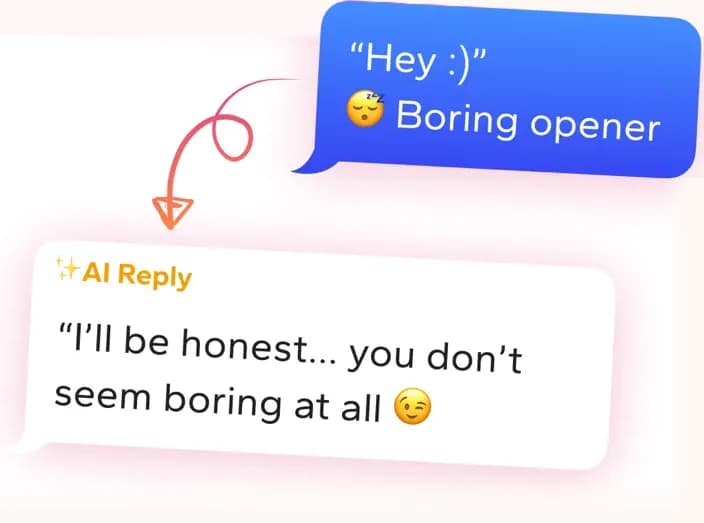
Get replies that sound like you
Screenshot the conversation in WingAI. It reads the vibe and gives you natural replies for this exact situation.
Try for freeRizz AI Screenshot the chat and get the next message for this person.
The pattern before the ghost
Ghosting usually doesn't happen suddenly. It's preceded by a visible shift in her replies. They get shorter. They take longer. She stops asking you questions. The energy drops.
If you're asking yourself whether you've messaged too much, you probably have. The instinct to send another message usually means the last one didn't land or didn't warrant urgency. Watch for those signs before they become a problem. Short replies plus slow response times means she's already checking out. Sending more messages at that point is just making it easier for her to stay gone.
Make each message count first
Before you worry about how many messages you can send, make sure each one is doing work. A good message either moves the conversation forward, shows something about you, or gives her a reason to reply that isn't obligation. If you're sending messages just to stay visible, she'll feel the desperation and pull back.
Every message should assume she might not reply. That sounds pessimistic but it's actually freeing. It means you're not setting up situations where you need her response. You're saying something worth saying, and if she replies, great. If not, you haven't built a house of cards. This mindset also stops you from sending follow-up messages that apologize for existing.
Wait before sending, wait before doubling down
If you've sent a message and it's been a few hours with no reply, the instinct to send another one is almost always wrong. That's when you stop. Wait for her to show up or she won't show up at all.
If three or four days pass with no reply and your last message wasn't clearly a question, you can send one more thing. Make it different from what you sent before. Don't reference the silence or apologize. Just send something that gives her an easy way back in, then stop. Anything beyond that is just noise. If she ghosts after that, she was already gone.
Why these replies fail
“hey, haven't heard from you. you good? just checking in lol”
It sounds needy and puts pressure on her to respond. It also doesn't give her anything to reply to except reassurance.
“okay I get it, you're busy. just let me know when you want to talk”
This is passive-aggressive and makes her feel guilty. It also tells her she can come back whenever she wants with no effort.
“hey... you still there?”
The ellipsis and question make it sound anxious. It's asking her to validate that she's still interested, which she'll avoid.
Common mistakes
- Sending two or three messages in a row without waiting for a reply
- Asking multiple questions in one message so she has to write a long response
- Continuing to text her the same way even though her replies got shorter
- Texting late at night when she might be winding down or busy
- Pivoting topics quickly when she gives one-word answers, which looks like you're nervous
Questions people ask
- Is it okay to send two messages in a row if they're different topics?
- No. Two messages in a row looks like you're nervous or talking to yourself. If she hasn't replied to the first one, a second one just makes you look like you're not paying attention to her pace. Combine what you want to say into one message or wait for her reply.
- How long should I wait before sending a follow-up text?
- At least three to four days if your last message was something that didn't specifically need a reply. If you asked a direct question and got no response, wait two to three days maximum. After that, one more message and then you're done. Anything more is chasing.
- Does sending longer messages make her less likely to ghost?
- The opposite. Longer messages feel like work to reply to and put pressure on her. Keep your messages short enough that she can reply quickly if she wants to. The length of your message should match the energy she's showing.
- What if she takes hours or days to reply but then sends a long message?
- That's usually a sign she's interested but busy or doesn't think fast replies matter. Match her pace instead of rushing to reply immediately. If she takes eight hours, you can take six. If she takes a day, wait most of a day back. This keeps the rhythm balanced.
What people say after using WingAI
“I overthink every text. Having three options and picking the one that sounds like me cut that spiral short.”
Sam R.
“I was skeptical at first. Then I tried it on a dry chat and the replies actually sounded like me, not a chatbot.”
Mazoonx
“She went cold mid-week and I had no idea what to say. The reply I sent felt natural and she picked the chat back up.”
Marcus T.
Get replies that sound like you
Screenshot the conversation in WingAI. It reads the vibe and gives you natural replies for this exact situation.
Try for free