How to reply when he pulls back after your first real argument
He went distant after you two disagreed for the first time. Here's how to read the silence and what your next message needs to accomplish.
After the first real argument, some guys vanish. They either think the relationship can't survive conflict, they're uncertain about you now, or they're testing whether you'll chase them. The silence itself is information. It tells you he hasn't figured out how to sit with tension yet.
A good reply here has to do three things at once. It needs to show you're not scared of what happened. It needs to give him a real reason to engage without begging for attention. And it needs to open a door for him to step back toward you without losing face.
The trap is either pretending the argument didn't happen, which rewards his avoidance, or overcorrecting and apologizing for things you didn't do wrong. You're aiming for something much narrower: a message that suggests you both can get past this.
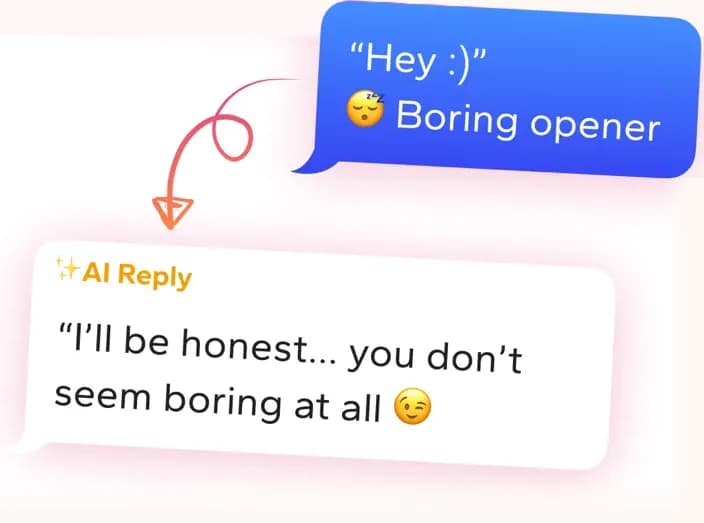
Get replies that sound like you
Screenshot the conversation in WingAI. It reads the vibe and gives you natural replies for this exact situation.
Try for freeRizz AI Screenshot the chat and get the next message for this person.
The coldness after conflict usually means one thing
When a guy goes quiet after the first real disagreement, it's rarely about the topic. It's about whether he believes you two can survive friction. He may not have vocabulary for it. He may be scared you're now angry at him. Or he's uncertain whether this is worth the effort if fighting is on the table.
The silence isn't punishment. It's avoidance. He's waiting to see if you'll chase, apologize broadly, or drop it. What he's not doing is thinking through the argument or planning to fix it. That takes a guy who's already developed conflict skills. So your read should be: he's stuck, not angry.
Your message needs to move him out of the waiting pattern
A good reply does two jobs. First, it acknowledges that something happened and that you're not pretending it didn't. This tells him you're not afraid and you won't let things fester. Second, it gives him a concrete reason to respond that doesn't require him to process the argument yet. That means either a light reference that shows you've moved past it, or a simple invitation to do something low-pressure together.
Don't ask him to rehash the disagreement. Don't ask him how he feels. Don't write a long reflection on what you both learned. Just signal that you're still here, you're not angry at him, and you're not going to disappear because one conversation got rough.
Send it by day four, then give him real space
Day one and two after an argument, silence can still feel active. He's processing. By day three or four, coldness turns into a pattern unless you interrupt it. That's your window. Send your message then, but only once.
After you send it, wait for his response with a full 48 hours minimum. If he replies, let him lead the speed of the conversation back. If he doesn't reply in 3 days, you have your answer: he's not ready to move past this or he's not interested in you enough to do the work. At that point, stop reaching out. A second message tips from 'I'm a person with dignity' into 'I'm chasing someone who left'.
Why these replies fail
“Hey, I'm sorry for how I handled things. I didn't mean to make you upset. Can we talk about it?”
This takes blame for the disagreement itself rather than your specific behavior, which rewards his avoidance and trains him to go cold when conflict appears.
“I hate that we're not talking right now. I care about you so much and I don't want this to ruin what we have.”
This puts emotional labor on him to reassure you, which makes him feel guilty instead of safe, and turns the argument into your problem to fix.
“Anyway, wanna grab drinks this weekend? I really miss you.”
Skipping over the argument entirely signals you're scared of conflict and willing to pretend it didn't happen, which doesn't solve the real problem.
Common mistakes
- Apologizing for the disagreement itself instead of specific things you said or did
- Writing a long explanation of your side of the argument
- Asking why he's upset or what he's thinking, which puts pressure on him to perform
- Sending a cheerful message that ignores the argument happened
- Waiting more than 4-5 days before reaching out, which lets coldness set in
Questions people ask
- Should I acknowledge the argument in my message?
- Yes, but briefly. A simple 'Hey, I know things got rough between us, and I don't want that to sit' shows you're not avoidant. Don't rehash what you disagreed about or assign blame. Just name that something happened and you're not running from it.
- What if he still doesn't reply after I reach out?
- Give it three full days. If nothing comes back, he's made his choice about whether he's willing to work through conflict. You can't force someone to engage. A second message only proves you care more than he does, which isn't a prize.
- Is it bad to text him before he texts me?
- Not at all. Someone needs to break the ice after conflict. If you always wait for him to reach out first, you're training yourself to be chased, not to be a partner. Reaching out shows maturity and conviction.
- How do I know if this argument actually matters or if I'm overreacting?
- It matters if he's gone cold in response to it. The specific topic doesn't matter. What matters is whether he can sit with disagreement. If a single argument triggers him to withdraw completely, that's how he'll behave under any real pressure down the line.
What people say after using WingAI
“I'm busy and half the profiles give you almost nothing to work with. WingAI gets me a solid first line fast without me staring at the screen for ten minutes.”
Ralph
“She went cold mid-week and I had no idea what to say. The reply I sent felt natural and she picked the chat back up.”
Marcus T.
“I was skeptical at first. Then I tried it on a dry chat and the replies actually sounded like me, not a chatbot.”
Mazoonx
Get replies that sound like you
Screenshot the conversation in WingAI. It reads the vibe and gives you natural replies for this exact situation.
Try for free