Why his jokes stopped and what to text back
His casual tone shifted to formal messages. Learn what changed and how to reply without pushing him away or ignoring the shift.
When someone goes from playful banter to stiff, measured texts, something in the dynamic has shifted. It's rarely about losing interest. More often he's uncertain about where things stand, worried about saying the wrong thing, or testing whether you'll match his energy. The formality is a defense.
A good reply doesn't pretend nothing changed or try to force jokes back. It acknowledges the shift by being real without being heavy. You're signaling that the casual space between you is still safe. You're also giving him a clear opening to relax again without making it weird if he doesn't take it.
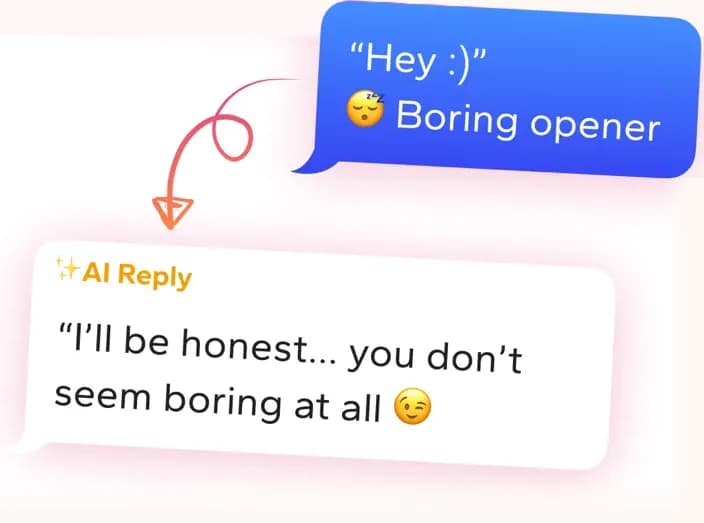
Get replies that sound like you
Screenshot the conversation in WingAI. It reads the vibe and gives you natural replies for this exact situation.
Try for freeRizz AI Screenshot the chat and get the next message for this person.
The formality usually means uncertainty, not loss of interest
Formal messages often show up when someone likes you but isn't sure how you feel, or when he's worried about overstepping. He might think you want serious and measured. He might be second-guessing a joke he made. He might be pulling back because he felt rejected or misread your last few responses. The shift is protective. It's him making the space smaller so there's less room to get hurt.
Sometimes formality also appears when he's distracted or stressed about other things. Work, family, or his own head space. That doesn't mean he doesn't like you. It just means he's operating in defense mode or he's not present enough to keep the banter going.
Your reply needs to reopen the casual space without forcing it
A good reply does two things at once. First, it shows him the playful, real version of you is still there and still interested. Not by being over the top or desperate, but by being direct and a little bit warm. Say what you actually think. Be the version of yourself he used to joke with.
Second, it removes the pressure. Don't ask him why he's being formal. Don't perform cheerfulness. Don't send a meme or joke unless it feels natural. Just respond to what he actually said in a way that opens the door back to normal without requiring him to match you right away. If he's ready, he'll step through it. If he's not, you've still shown him it's safe.
Wait for his next message before you read too much into silence
Send your reply and then actually wait. Don't send a follow up for at least three to five days, even if he doesn't respond quickly. Formal texters often need time to recalibrate. A follow up message too soon reads as pressure and will make him retreat further.
If he doesn't respond for over a week and you've sent one clear, warm reply, that's your answer. He's either not ready, not interested enough, or too stuck in his own head. At that point, you can send one more low-pressure message, but don't keep extending. If he comes back, great. If he stays formal or distant, you're better off with someone who shows up differently.
Why these replies fail
“I noticed you've been kinda formal lately. Everything okay? You know you can joke around with me, right?”
Calling out the change makes it awkward and puts him on the defensive instead of giving him a natural way back.
“That's cool lol 😂😂😂 anyway did you see that thing yesterday hahaha”
Forcing jokes and exaggerated energy reads as performative and makes the gap between his tone and yours more obvious, not less.
“okay cool thanks for letting me know”
Mirroring his formality confirms the shift and makes it feel permanent instead of inviting him back to normal.
Common mistakes
- Matching his formal tone right back, which locks you both into stiff mode
- Asking 'why are you being weird' or calling out the change directly, which makes him defensive
- Sending a joke to force the old dynamic back, which feels desperate if he's not ready
- Ignoring it and staying distant too, which confirms to him that things are cold
- Over-explaining or being extra cheerful to compensate, which reads as trying too hard
Questions people ask
- Does formal texting always mean he's losing interest?
- Not necessarily. Formality is usually a sign of uncertainty or distance, not lack of interest. He might be worried he overstepped, unsure where you stand, or dealing with stuff outside the chat. The shift is worth paying attention to, but it's not automatically a rejection.
- Should I call out the change or just reply normally?
- Just reply normally. Calling it out forces a conversation about the dynamic instead of letting you both slip back into it naturally. A warm, real reply shows him the space is still safe without making it weird.
- How long should I wait for him to respond before I send another message?
- Wait at least three to five days after a clear, warm reply. Formal texters often need runway to relax. A follow up too soon reads as pressure and will push him further into his shell.
- What if he stays formal even after I reply warmly?
- Give it two exchanges. If he's still measured and stiff after you've sent one real, warm reply and he's responded but stayed distant, that's showing you he's not ready or willing to go back. You can try once more, but after that, step back and see if he brings the shift or if this is just who he is right now.
What people say after using WingAI
“I was skeptical at first. Then I tried it on a dry chat and the replies actually sounded like me, not a chatbot.”
Mazoonx
“She went cold mid-week and I had no idea what to say. The reply I sent felt natural and she picked the chat back up.”
Marcus T.
“My openers used to be boring. Now I reference something from her profile and people actually write back.”
Aiden K.
Get replies that sound like you
Screenshot the conversation in WingAI. It reads the vibe and gives you natural replies for this exact situation.
Try for free