He says he likes me but his actions don't match
When words and behavior don't align, your reply needs to test reality. Learn what to say and when to stop waiting.
The gap between what someone says and what they do is real information. He might mean it emotionally but not prioritize you. He might be comfortable talking about feelings without following through. Or he's keeping his options open. Your job isn't to convince him to care. It's to see who he actually is and respond to that.
A good reply here does two things at once. It calls out the mismatch without sounding accusatory, and it gives him a clear chance to show up differently. You're not asking for explanations. You're creating a moment where his next move tells you everything.
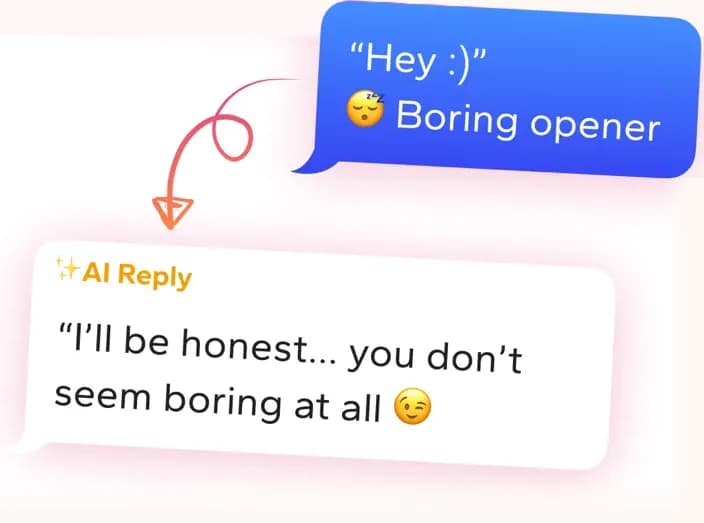
Get replies that sound like you
Screenshot the conversation in WingAI. It reads the vibe and gives you natural replies for this exact situation.
Try for freeRizz AI Screenshot the chat and get the next message for this person.
The pattern is louder than the compliment
When someone's words contradict their actions over time, the actions are the truth. A person who likes you makes time. A person who likes you follows through on plans. A person who likes you reaches out consistently. Small slip-ups happen. But if this is the pattern, he's already told you how much you matter to him, just not with words.
This isn't about one bad day or a busy week. It's about weeks or months where his effort doesn't match his language. That specific pattern is what you're responding to, not a single instance. Name the pattern in your head first so you know exactly what you're addressing.
Show him the door without slamming it
Your reply needs to be direct and calm. Describe what you've noticed without anger or hurt in the tone. Then set a simple boundary about what comes next. Don't ask him to explain himself. Don't list all the times he let you down. Instead, say something close to 'I notice X and Y aren't lining up, and I need someone who shows up for me.' Then stop typing.
This works because it doesn't accuse. It states a fact and a need. It also leaves room for him to change if he wants to, but doesn't beg him to. You're giving him a very clear view of the choice he's making.
Wait three days, then move on
Send your message on a Tuesday or Wednesday afternoon, not late at night. Give him three days to respond with an actual change, not an apology or explanation. Three days is long enough for a real person to adjust his behavior, short enough that you're not waiting around.
If he doesn't change in the next two weeks, stop reaching out. Let his silence answer you. Don't spiral into whether he's busy or whether you were too harsh. You already told him what you needed. If he cared enough, he would move. The absence of effort is the answer.
Why these replies fail
“Okay so I've noticed you say you like me but then you go three days without texting and you cancel plans and you're hot and cold. What's really going on?”
It's a list of grievances that forces him into defense mode instead of reflection, and the question invites him to explain rather than change.
“I think you're a great person but I just don't feel like this is working for me anymore.”
It's too soft and makes it sound optional or uncertain on your end, which signals he can wait you out.
“I really like you and I know you like me too, but I need you to try harder and show me you care.”
Appealing to what he said and asking him to 'try harder' keeps the focus on effort and emotion instead of concrete change.
Common mistakes
- Listing everything he didn't do, which puts him on defense instead of action
- Asking 'why' questions that invite excuses instead of change
- Staying soft and hopeful, which signals you'll accept words over behavior
- Giving him another chance without naming what needs to shift
- Waiting too long to address it, which signals it doesn't bother you
Questions people ask
- Should I give him another chance after I say this?
- Only if his behavior visibly shifts within two weeks. 'Another chance' means you see actual change, not promises. If he goes back to the old pattern, don't. He's already shown you who he is and you've already told him what you need.
- What if he apologizes but doesn't change?
- An apology without change is just words, which is exactly the problem you're already dealing with. Apologies are free. Follow-through costs time and effort. Watch what he does in the next two weeks, not what he says.
- How do I stay calm and not sound angry when I write this?
- Write it in the afternoon, not when you're upset. Read it out loud before sending. If it sounds sharp, soften the language but keep the message the same. You want factual, not emotional. 'I've noticed' works better than 'You always' or 'You never.'
- What if he asks why I'm suddenly bringing this up now?
- Because you're noticing it now and setting a boundary now. That's enough. You don't owe him an explanation for your own needs. If he pushes back with 'why didn't you say something sooner,' that's him avoiding the point. Stay focused on what needs to happen next.
What people say after using WingAI
“I overthink every text. Having three options and picking the one that sounds like me cut that spiral short.”
Sam R.
“I was skeptical at first. Then I tried it on a dry chat and the replies actually sounded like me, not a chatbot.”
Mazoonx
“I'm busy and half the profiles give you almost nothing to work with. WingAI gets me a solid first line fast without me staring at the screen for ten minutes.”
Ralph
Get replies that sound like you
Screenshot the conversation in WingAI. It reads the vibe and gives you natural replies for this exact situation.
Try for free