He said yes but keeps pushing back on when to meet
He agreed to plans but now seems uncertain about timing. Learn how to read hesitation and respond without chasing.
When someone says yes to meeting but then starts hedging on when, it usually means he's either interested but something real is blocking his schedule, or he liked the idea in theory but isn't that invested now that it's concrete. The difference matters because your next move changes based on which one it is.
His hesitation might show up as vague language ('maybe next week?'), pushing dates further out ('possibly in a few weeks'), or suddenly citing logistics ('I'm swamped right now'). What you're watching for is whether he's trying to keep the door open or actually closing it.
A good reply doesn't push him to commit. Instead it calls out the pattern, gives him an easy path forward if he wants it, and sets a boundary for how long you'll hold space for uncertainty. You want him to either step up or step aside, not string things along.
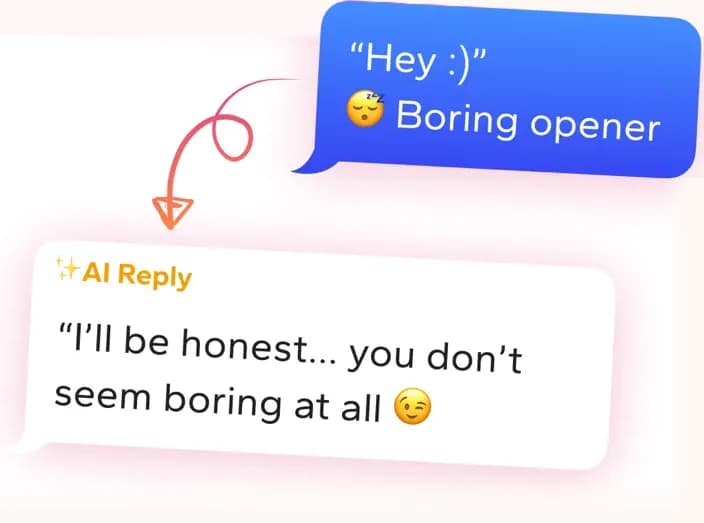
Get replies that sound like you
Screenshot the conversation in WingAI. It reads the vibe and gives you natural replies for this exact situation.
Try for freeRizz AI Screenshot the chat and get the next message for this person.
What hesitation actually signals when he already said yes
A yes followed by hedging is different from a no. He's not rejecting you, but he's also not treating it like a priority. Real interest moves toward concrete plans. Hesitation usually means he's keeping you as a backup option or he's lost momentum since the initial conversation.
Watch what kind of hesitation it is. If he's offering alternative dates or asking what works for you, there's still real interest even if it's messy. If he's going silent, suddenly mentioning how busy he is, or saying 'I'll let you know', that's him slowly backing out without saying so directly. The second pattern rarely turns into a meet.
Pin down a specific date without sounding desperate
Your job is to move from vague interest to a concrete plan or nothing. Don't offer ten options or say 'whenever works for you' because that puts the load on him to decide. Instead, propose one or two specific dates and ask him to pick. Keep it simple: 'Tuesday at 7 or Thursday at 6?' not 'I'm free basically any time so just tell me what's good'.
If he can't pick from two specific options, he's telling you something. It's not about him needing more flexibility. Follow up once more with a slightly shorter window, then let it go. You're testing whether he actually wants to meet or just liked being wanted.
Let silence and reschedules tell you when to stop waiting
Set an internal deadline. If he doesn't lock in a date within three to four days, or if he cancels and doesn't reschedule on his own within 24 hours, you're done. Don't send multiple follow-ups or get creative with your outreach. One clear ask, one follow-up if needed, then move on.
If he keeps saying yes and then backing away from timing, he's using you for attention. That pattern only gets worse. Stop suggesting dates and stop checking in. If he actually wants to meet, he'll make it happen without you managing it for him.
Why these replies fail
“Haha no worries, we can totally figure it out whenever! I'm super flexible and want to work around your schedule.”
This removes all urgency and tells him you'll wait indefinitely while he decides if he wants to show up.
“Is everything okay? Are you having second thoughts about meeting up?”
Asking why invites excuses and puts you in a therapist role instead of just reading the signal and moving on.
“Cool, so I guess we'll just see when things calm down on your end then.”
This is passive and resentful without being direct, and it signals you'll keep waiting around.
Common mistakes
- Offering more and more options to make it easier for him, which signals you're willing to chase
- Getting frustrated in text, which turns the conversation into conflict instead of clarity
- Waiting weeks for him to 'figure out his schedule' when he's showing he won't
- Asking why he's hesitant, which invites excuses instead of action
- Disappearing entirely to 'play it cool', which just wastes both your time
Questions people ask
- How long should I wait for him to lock in a date before I give up?
- Three to four days. If he can't pick a time from two specific options within that window, he's not motivated enough. One follow-up is fine. After that, moving on is the right call. You're testing whether he wants to meet, not teaching him how to use a calendar.
- What if he has a real reason for the delay, like work travel?
- If it's real, he'll either give you a specific date when he's back or suggest pausing until his schedule clears. That's different from vagueness. A real conflict comes with information. If he's swamped, he can still say 'I'm in meetings all week, can we do the 15th instead?'
- Should I back off and let him come to me?
- No. One clear ask and one follow-up, then silence is your answer. Disappearing entirely looks like you lost interest, which can actually backfire. Make one straightforward move, then step back and let his actions tell you if he wants to meet.
- What if he reschedules after we lock in a date?
- If he cancels without offering a new time within 24 hours, don't chase him. You already made the move. If he wants to reschedule, he can initiate it the next time. One canceled plan is maybe bad timing. Two is a pattern.
What people say after using WingAI
“I was skeptical at first. Then I tried it on a dry chat and the replies actually sounded like me, not a chatbot.”
Mazoonx
“I overthink every text. Having three options and picking the one that sounds like me cut that spiral short.”
Sam R.
“Used it for a couple hours and set up a date the same night. Not even kidding.”
Nikola2214
Get replies that sound like you
Screenshot the conversation in WingAI. It reads the vibe and gives you natural replies for this exact situation.
Try for free