Is 'I was hurt before' a real reason or just an excuse
When he mentions past relationship pain, figure out if it's a barrier to work through or a sign he's not ready for you.
When someone says they've been hurt before, they could mean two different things. One is real: they're flagging an actual wound that might show up as trust issues, walls, or slow emotional movement. The other is avoidance. He's using the past as a reason to pull back, stay unavailable, or keep you at arm's length without actually doing anything about it.
The difference matters because your reply has to test which one it is. A good reply doesn't accept the excuse at face value and it doesn't dismiss his pain either. It signals that you see the difference between having a reason and using it as a permanent pass.
Your goal is to show that you're willing to work with real hurt, but you're not going to wait around for someone who's just using it as cover for half-commitment.
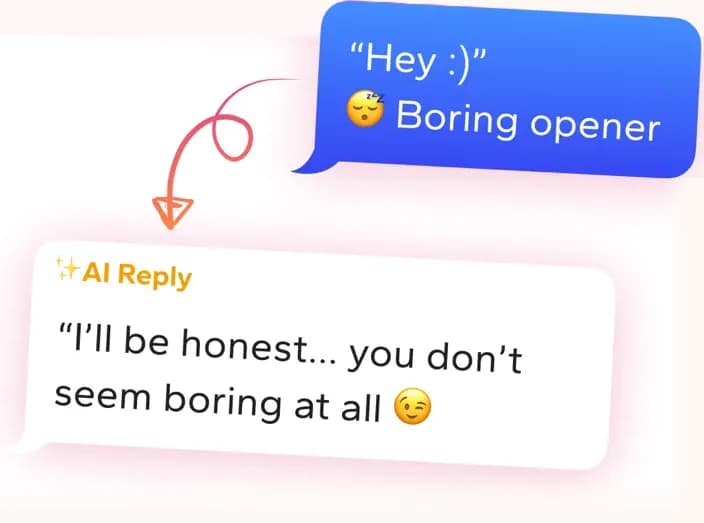
Get replies that sound like you
Screenshot the conversation in WingAI. It reads the vibe and gives you natural replies for this exact situation.
Try for freeRizz AI Screenshot the chat and get the next message for this person.
Real remorse includes acknowledgment and openness to change
Someone with real hurt acknowledges it happened, shows some awareness of how it affects them now, and either talks about working on it or at least seems open to it. An excuse is when the past is mentioned but nothing changes. He stays guarded, unavailable, or distant, and the hurt becomes the reason why you have to accept less from him.
Listen for whether he's claiming the injury or just pointing to it. Real pain sounds like 'I struggle with trust because of what happened.' An excuse sounds like 'I've been hurt so I can't really let anyone in right now,' especially if he says it when you're trying to move closer. One is about him. The other is a condition he's setting for you.
Taking his pain seriously while refusing to excuse inaction
A good reply does two things. First, it shows you take his experience seriously, not by over-comforting him but by treating it as real information about how he operates. Second, it raises the bar. You acknowledge the hurt exists and then make it clear that hurt is not the same as an action plan. Your move is to gently separate the past from the present, and ask or imply what he's actually doing about it.
Don't make it aggressive. Just shift from 'poor you' to 'okay, so what now.' This filters out guys who are just testing whether you'll accept less effort.
What his silence reveals about his willingness to grow
If you reply by holding a boundary and he goes quiet, that tells you something. He may not be ready for someone who won't let the past be a permanent free pass. That's information you needed.
If he comes back with more detail about what he's working on or what he needs from you, he's real. If he changes the subject or softens into apologies, he's uncomfortable with the boundary but might still show up. If he disappears, he wanted the excuse to work. Wait three to four days before deciding it's over. After that, stop. Don't reach out asking if he's okay or giving him another chance to explain.
Why these replies fail
“I totally get it, I've been hurt too. We can heal together.”
It centers your pain instead of staying focused on what he's actually asking for, and it promises something you can't deliver.
“Do you want to talk about what happened? I'm here to listen.”
It invites him deeper into his past instead of asking whether he's working toward his future with you.
“That's okay, take your time. I'm patient.”
It removes any pressure or expectation, which tells him his pace is the only thing that matters regardless of where you stand.
Common mistakes
- Saying 'I understand' and dropping it, which lets him avoid explaining what he actually needs
- Turning yourself into his therapist by over-validating his pain without asking what he's doing about it
- Ignoring the comment entirely, which misses the chance to see if he's serious or just testing your boundaries
- Offering reassurance that you're different, which puts the burden on you to prove it
- Asking him to talk more about his ex, which extends the conversation into his past instead of your future
Questions people ask
- How do I know if he's actually working through his past or just saying that?
- Watch what he does, not what he says. Is he more present over time, or do you keep seeing the same walls? Does he ever acknowledge how his behavior affects you, or is the past always the explanation? Real work is slow but directional. Stuck is stuck.
- Should I bring up past relationships if he doesn't mention his?
- Only if it comes up naturally. If you're starting to feel his distance and you want to know why, ask directly about what he needs from you now, not about his ex. Keep the focus on the present.
- What if he says he's hurt but seems fine, like he's over it?
- People can seem fine and still be protecting themselves. The lie isn't that he was hurt. The lie is usually that he's already processed it when he hasn't. Watch for trust tests, sudden withdrawal, or patterns that match what he said.
- Is it a red flag if he brings this up very early on?
- Early mention can go either way. Some people overshare because they're anxious. Others use it as a preemptive excuse. The flag isn't the mention itself. It's whether he acts like it should change your expectations of him right away.
What people say after using WingAI
“I was skeptical at first. Then I tried it on a dry chat and the replies actually sounded like me, not a chatbot.”
Mazoonx
“I overthink every text. Having three options and picking the one that sounds like me cut that spiral short.”
Sam R.
“I'm busy and half the profiles give you almost nothing to work with. WingAI gets me a solid first line fast without me staring at the screen for ten minutes.”
Ralph
Get replies that sound like you
Screenshot the conversation in WingAI. It reads the vibe and gives you natural replies for this exact situation.
Try for free