He doesn't remember things I told him recently
He forgot details you shared. Learn what this signals and how to respond without sounding bitter or over-explaining.
When someone forgets recent details you told them, it usually points to a few things. He wasn't paying attention when you said it. He didn't think it was worth storing. Or he's distracted enough that it didn't stick. Forgetting something from months ago is different. Forgetting something recent tells you something about how present he actually is.
Your reply needs to do two jobs at once. First, surface the thing he forgot without turning it into a trap or a test. Second, give him information about what this moment means for you, without lecturing him about it.
The best replies acknowledge the pattern lightly and let him either step up or show you how scattered he really is. You're not trying to fix him. You're trying to see if he listens when it matters.
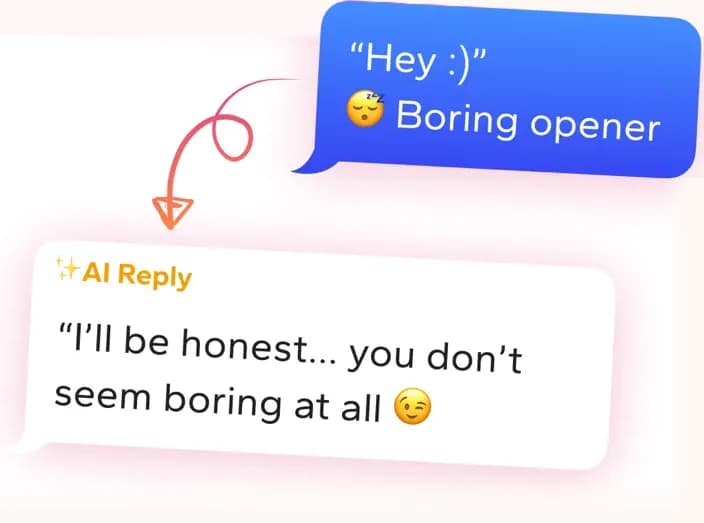
Get replies that sound like you
Screenshot the conversation in WingAI. It reads the vibe and gives you natural replies for this exact situation.
Try for freeRizz AI Screenshot the chat and get the next message for this person.
Forgetfulness this soon usually means low attention, not low interest
If he forgot something you told him days ago instead of years ago, it's worth paying attention to the pattern. This isn't about him being a bad person. It's about whether he's actually present when you're talking to him. Is he scrolling. Half-listening. Scattered. Does he forget things you say but remember details about his hobbies or work.
The signal here is that either you're not landing as a priority in the moment, or he's in a state where he's not holding onto much. Both are useful information. A guy who cares about you typically doesn't need to be reminded of what you told him last week. It stays with him.
Point out the gap without sounding like a test
A good reply names the thing he forgot, but it doesn't ask him to explain himself or justify it. Don't say 'why would you forget that.' or 'I literally just told you.' Instead, state it as a fact and include what you were expecting from him. 'I mentioned this on Tuesday and I was waiting to hear if you'd ask me how it went' is different from 'you never listen to me.'
The second move is to let him feel the real consequence. Not punishment. Consequence. If he forgets you have an interview, he doesn't get to be the first person you call with the update. If he forgets plans, the plan changes or it's off. Make it matter without making it dramatic.
Wait 24 hours, then accept what you see
Send your reply when you're not angry, but send it. Don't wait for him to remember on his own. Give him a chance to respond and actually address it, not deflect or make a joke. Watch whether he apologizes and asks for the detail again, or whether he gets defensive.
If he doesn't respond or changes the subject, that's your answer. You now know he's not someone who steps up when called out gently. If this becomes a pattern across multiple situations, stop expecting him to remember. Either accept that you'll always have to remind him, or recognize this is telling you something bigger about his investment level.
Why these replies fail
“Wow, okay, I guess I'm just not important enough for you to remember”
This punishes him instead of naming the specific thing he forgot, and it makes the conversation about your worth instead of his actual lapse.
“It's fine, don't worry about it”
Staying silent teaches him that forgetting you has no consequence, so he won't change anything.
“Remember when I told you about X. Well I also told you about Y. And last week you forgot Z too. This is a pattern.”
Piling on old examples overwhelms the current moment and makes it feel like an attack instead of a specific callout.
Common mistakes
- Repeating the forgotten detail in a patient, teaching tone (makes you sound like his mom)
- Staying silent and hoping he notices on his own (he won't, and resentment builds)
- Bringing up old examples of him forgetting things (turns one mistake into a character trial)
- Asking 'why didn't you remember' (puts him on defense instead of showing him the impact)
- Letting it slide without mentioning it (signals it doesn't matter when it does)
Questions people ask
- Is it ever okay to just let this go.
- Only if it happens once and you don't care about the thing he forgot. If it's something that mattered to you and you said it clearly, mentioning it is fair. Staying quiet teaches him there are no stakes to not listening.
- What if he gets defensive when I bring it up.
- A defensive response is your answer. He's not taking responsibility for his attention. You now know he's more likely to blame you or deflect than to adjust. This tells you whether he's worth continuing with.
- Should I test him by repeating things to see if he remembers.
- No. That's a trap, not a conversation. If you're already wondering whether he listens, you don't need more proof. You need to decide if this is a dealbreaker.
- How do I know if it's a real problem or just him being scatter-brained.
- Ask yourself: does he remember things about his interests, his friends, or his work. If yes but he forgets about you, that's a choice. If he forgets everything, that's a different issue, but you still shouldn't have to manage his memory for him.
What people say after using WingAI
“I was skeptical at first. Then I tried it on a dry chat and the replies actually sounded like me, not a chatbot.”
Mazoonx
“I overthink every text. Having three options and picking the one that sounds like me cut that spiral short.”
Sam R.
“I always freeze on the first sentence. This gets me past that blank box so I actually hit send.”
joejoe4567
Get replies that sound like you
Screenshot the conversation in WingAI. It reads the vibe and gives you natural replies for this exact situation.
Try for free