Apologize for making her nervous without overdoing the self-blame
Send an apology that acknowledges her feelings, stays brief, and moves forward without turning it into a bigger issue than it is.
You picked up on the fact that she felt uncomfortable or anxious during or after your last interaction, and you want to fix it. The problem is that a bad apology either doubles down on the awkwardness by making it a huge thing, or ignores her feelings entirely and expects her to get over it.
A good apology text does two things at once: it shows you noticed and cared enough to address it, and it gives her permission to move on without dwelling. It's not about litigating what happened or begging for forgiveness. It's about resetting the tone so the next conversation doesn't carry the weight of the last one.
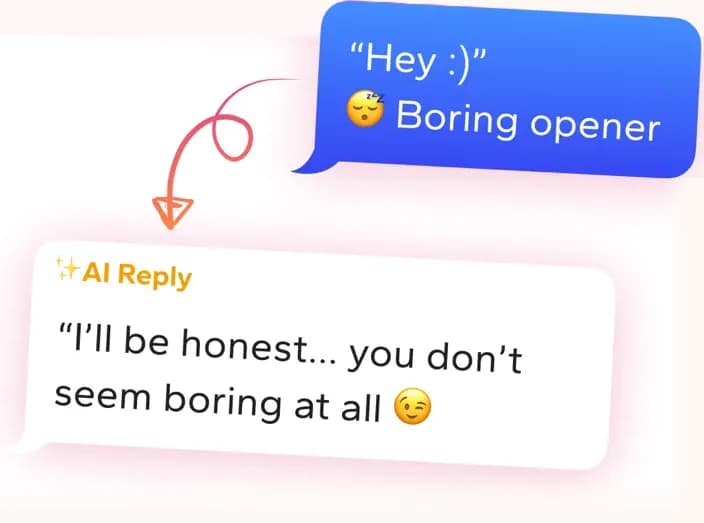
Get replies that sound like you
Screenshot the conversation in WingAI. It reads the vibe and gives you natural replies for this exact situation.
Try for freeRizz AI Screenshot the chat and get the next message for this person.
She's giving you a signal, not ending things
When someone tells you they felt bad because of your nervousness, she's not ghosting you. She's saying that your anxiety affected the vibe, and she noticed. That's actually information you can work with. She cared enough to mention it instead of just disappearing, which means she didn't write you off. What she's testing now is whether you can handle a small moment of awkwardness with grace. If you panic or over-correct, you'll confirm that being around your anxiety is exhausting. If you acknowledge it simply and move on, you signal that you're someone who can handle a hiccup.
Keep the apology short and action-forward
The move is to name what happened in one sentence, acknowledge her feelings without excuses, and point toward the next thing. Do not dissect your anxiety, do not ask her to reassure you, and do not list reasons why you were nervous. Your job is to show you're aware, not to recruit her into processing your emotions. Then give her an easy opening to accept it by either asking a neutral question or suggesting something simple. The faster you move past it, the less time she spends replaying the uncomfortable moment in her head.
Send it within a few hours, then let her respond
Send the apology the same day or early the next morning if you only realized later. Waiting three days makes it look like you didn't care. Once it's sent, stop. Do not send a follow-up text in two hours asking if she's mad. Do not send another apology if she doesn't reply immediately. Give her at least 24 hours to respond. If she replies, take her at face value. If she doesn't reply within two days, move on. A non-reply after an apology often means she's processing, and pinging her again won't help.
Why these replies fail
“I'm so sorry about yesterday. I was really nervous and wasn't thinking straight. I hate that I made you feel uncomfortable. I promise I'll be better next time. You know I didn't mean anything by it.”
This centers your anxiety instead of her feelings and asks her to manage your guilt, which makes the apology about you.
“I wasn't trying to make you uncomfortable. You seemed fine to me, so I'm not sure what happened, but sorry if you took it wrong.”
This questions her reaction instead of accepting it, which tells her the apology isn't real and you're defensive.
“My bad about yesterday. Anyway, want to grab drinks this weekend?”
This acknowledges nothing and pivots too fast, which feels dismissive and confirms you don't actually care what happened.
Common mistakes
- Over-explaining or making it about you ("I was so nervous I...") instead of acknowledging her experience
- Turning the apology into a debate ("I wasn't trying to...") that forces her to defend her reaction
- Going silent instead of addressing it, hoping she forgets
- Sending a wall of text that makes the mistake feel bigger than it was
- Apologizing multiple times or bringing it up again in the next message
Questions people ask
- Should I apologize if she didn't explicitly say she was upset?
- If you felt the energy shift or sensed discomfort, yes. A short, light apology is better than pretending nothing happened. It shows you're paying attention. Keep it casual so it doesn't feel like you're reading too much into things.
- What do I do if she says 'you're fine' or 'it's okay'?
- Take her at her word and move on. Do not litigate it further or send another apology. If she accepted it, she accepted it. Anything after that reads as you wanting reassurance instead of her actually forgiving you.
- Is it better to apologize in person or over text?
- Text is fine for a small moment. In person is better for something bigger, but a quick text apology signals that you're self-aware and keeps momentum. Reserve in-person conversations for when you need to actually talk about something.
- How many times can I bring this up before it feels like I'm making it weird?
- Once. After your apology and her response, do not mention it again. Bringing it up a second time makes it seem like you can't move past it and turns a small hiccup into a relationship issue.
What people say after using WingAI
“My openers used to be boring. Now I reference something from her profile and people actually write back.”
Aiden K.
“I overthink every text. Having three options and picking the one that sounds like me cut that spiral short.”
Sam R.
“Used it for a couple hours and set up a date the same night. Not even kidding.”
Nikola2214
Get replies that sound like you
Screenshot the conversation in WingAI. It reads the vibe and gives you natural replies for this exact situation.
Try for free