Hinge prompt answers for a nurse who works nights
How to answer a Hinge prompt from a nurse working nights, with what her answer signals, what a good reply does, and when to follow up.
A nurse on night shifts is usually answering prompts and messages on a schedule that does not match a typical dating rhythm. She may be awake at 6am after a shift, asleep through the afternoon, and replying in small gaps between her own commitments. A prompt answer that reads as a long, slow, thoughtful thing is probably one she wrote in a short window, so it tells you about her energy and interests more than her availability.
What her answer signals is often a mix of directness and tiredness. Nurses who work nights tend to be blunt about schedules, pragmatic about dates, and wary of anyone who wants a lot of back-and-forth before a plan. A prompt about a favorite spot or a weekend habit will often be answered with something concrete and a bit dry, which is a good sign that she values specifics over performance.
A good reply responds to the actual content of her answer, shows you read it, and makes it easy for her to say yes to something small. It should not ask her to explain her job, sympathize with her hours, or make her feel like her schedule is a problem to solve.
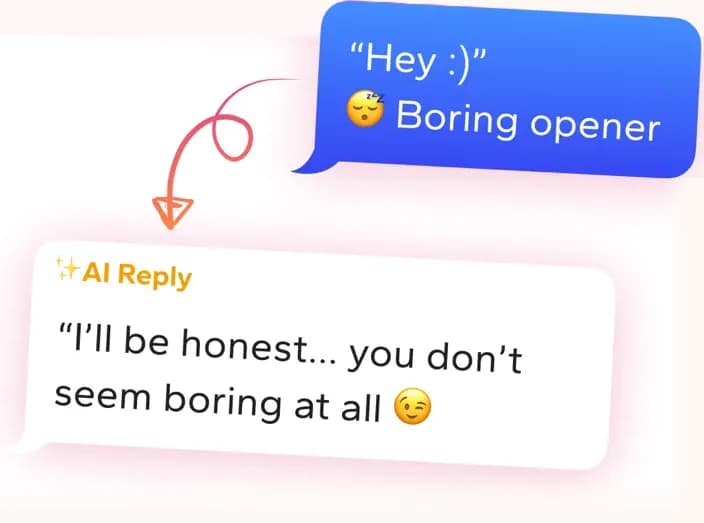
Get openers that sound like you
Screenshot the conversation in WingAI. It reads the vibe and gives you natural openers for this exact situation.
Try for freeHinge AI Screenshot the prompts and get a comment written for that profile.
Read the prompt answer for energy, not effort
A nurse who works nights writes her prompt answers in the gaps of a schedule that is not built for leisure. A short, specific answer like sleeping late or a cold drink after a shift is not a sign she is uninterested. It is what a person looks like when she has real things she enjoys but limited time to think about them. Pay attention to the one or two concrete details she picked. They tell you what she wants more of in her off hours, which is the most useful thing to build a reply around.
Do not read a flat tone as a closed door. She may be writing from a post-shift haze, and the prompt she chose probably reflects what is actually on her mind. Dry humor and practical details are common in this group, and they usually mean she would rather have an easy, direct exchange than an elaborate one.
Pick up the detail she already gave you
The best reply to a night-shift nurse usually connects to one specific thing in her answer, like the crust detail or the post-shift drink, and turns it into a small, low-effort question or observation she can answer in a sentence. This works because it shows you were paying attention and it gives her something easy to respond to without having to explain her schedule. Avoid anything that makes her defend her hours or describe her job in detail on the first exchange.
Keep the reply light enough that she can answer between tasks. A reply that needs a thoughtful paragraph will sit unanswered for a day, not because she lost interest but because she never had a free moment to write it.
Reply in daylight, not at 2am
Timing with a night-shift nurse is less about the clock and more about her rhythm. If she works nights, the times she is most likely to be free and awake are often mid-morning or early afternoon on her days off, and the hours right before a shift are usually taken up with getting ready. Sending a message at midnight can land as a lot of attention from someone who is about to go to bed, and sending it at 6am can land when she has just gotten home and is trying to sleep.
If you do not hear back after a day or two, send one short, low-pressure follow-up tied to something concrete, then leave it. If there is still nothing after that, let it go. Night-shift schedules make silence common and rarely personal, but a pattern of unanswered messages after two tries is a clear signal to move on without making it a thing.
Why these openers fail
“Night shifts sound brutal, how do you even sleep? I'm sure you're exhausted all the time”
It fixates on her job and schedule instead of her answer, and it asks her to explain something she has probably explained many times.
“Hey, I saw your prompt. We should definitely grab a drink sometime, when are you free this week?”
It jumps to a plan with no real connection to what she wrote, so it reads as generic and asks her to do scheduling work right away.
“A cold drink after a 12 hour shift sounds like the best thing ever. I've been thinking about it all week and I really think you'd love the bar I'm into, you should come check it out with me and tell me what you think of it”
It is too long and too eager for a short, tired answer, and the pressure to come along makes it feel like the conversation is already moving faster than she wants.
Common mistakes
- Treating the night shift as the main topic and asking about it in every message
- Writing a long, carefully crafted reply to a short, tired answer
- Sending the first message at a time that suggests you expect an immediate response
- Ignoring the concrete detail she gave and jumping straight to a plan
- Following up with the same energy after a quiet day, so she feels chased
Questions people ask
- How do I answer a Hinge prompt from a nurse who works nights?
- Respond to the specific detail she included, like a habit or a favorite thing, and keep your reply short and easy to answer. Avoid focusing on her shifts or her job. A light question or observation about what she mentioned gives her an easy way to respond between her own commitments.
- What time should I message a nurse who works nights?
- Aim for her likely free window, which is often mid-morning or early afternoon on her days off. Avoid late-night messages when she may be about to sleep, and avoid early morning messages right after a shift when she is likely trying to rest.
- Should I ask about her schedule on the first message?
- Usually not. Asking about her shifts on the first message can make her feel like her schedule is the main topic, and she has probably answered that question many times. Let her bring up her work if she wants to, and focus on what she wrote in her prompt.
- How long should I wait before following up with a night-shift nurse?
- Give it a day or two, since her schedule can make replies slow without meaning she is uninterested. If you send one short follow-up tied to something concrete and still get no response, let it go instead of sending more messages.
What people say after using WingAI
“I always freeze on the first sentence. This gets me past that blank box so I actually hit send.”
joejoe4567
“My openers used to be boring. Now I reference something from her profile and people actually write back.”
Aiden K.
“I'm busy and half the profiles give you almost nothing to work with. WingAI gets me a solid first line fast without me staring at the screen for ten minutes.”
Ralph
Get openers that sound like you
Screenshot the conversation in WingAI. It reads the vibe and gives you natural openers for this exact situation.
Try for free